
When Deep Space Meets Wildfires: The Threat to NASA's Madrid Complex

Introduction
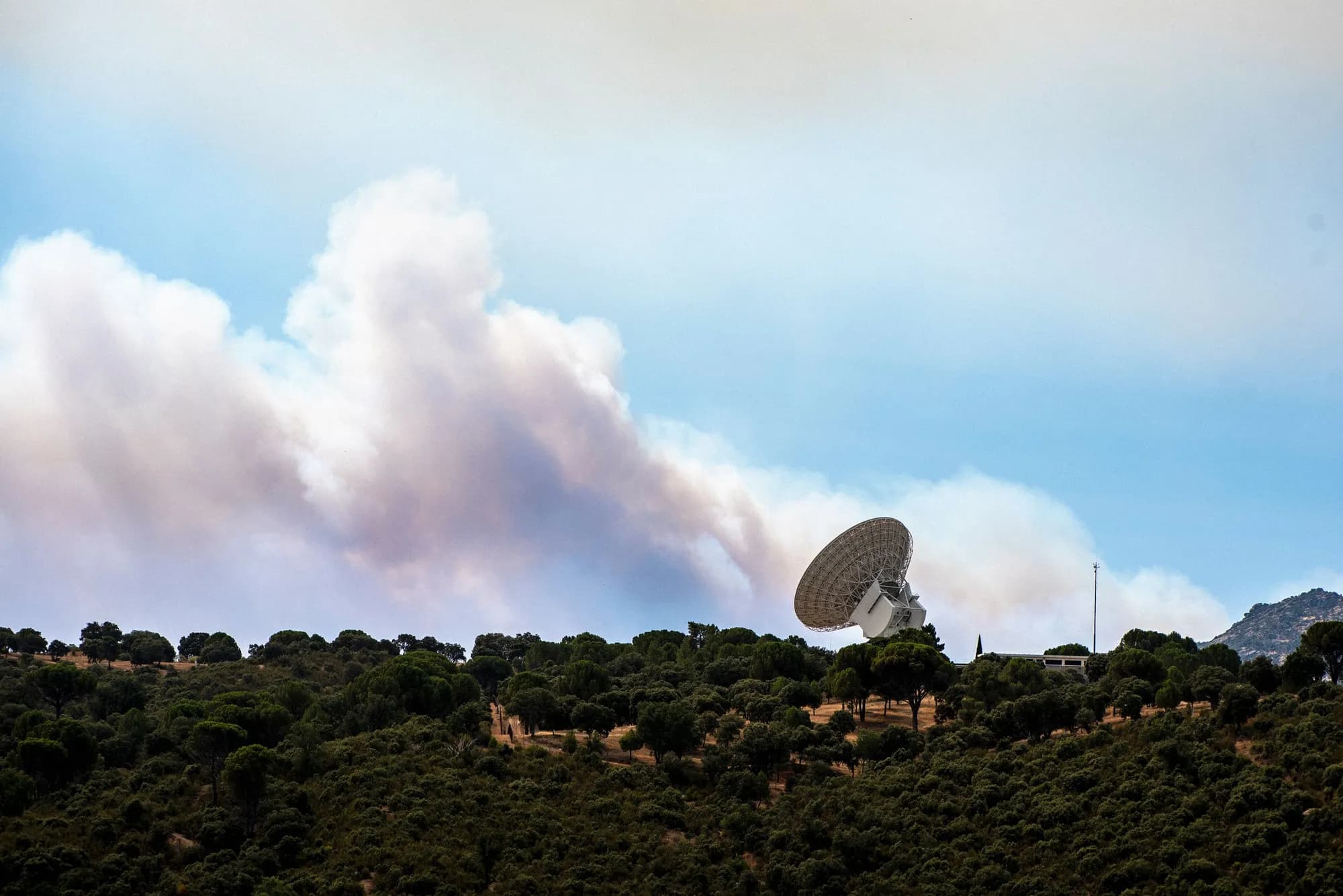
In an era where humanity's gaze stretches billions of light-years into the cosmos, our deepest space probes still rely on fragile connections anchored right here on Earth. Recently, a stark reminder of our planetary vulnerabilities emerged when severe wildfires swept through the region surrounding the Madrid Deep Space Communications Complex, one of the foundational listening posts for NASA's interplanetary missions. As emergency services battled aggressive blazes, the immediate fate of critical tracking antennas remained shrouded in uncertainty, highlighting the physical risks facing our digital bridges to the stars.
The Anatomy of the Deep Space Network
To understand the gravity of the situation, one must look at the backbone of modern interplanetary exploration: NASA’s Deep Space Network, commonly known as the DSN. Comprising three massive antenna complexes strategically spaced approximately 120 degrees apart around the globe—in Goldstone, California; Canberra, Australia; and Madrid, Spain—the DSN ensures continuous communication with spacecraft regardless of Earth's rotation. Without these giant parabolic dishes, mission controllers would lose contact with iconic missions currently navigating the solar system, from Mars rovers to deep-space probes exploring the outer planets.
The Madrid facility, operated in cooperation with Spanish institutions, is far more than a simple satellite dish farm. It houses highly sensitive receivers, cryogenic cooling systems, powerful transmitters, and complex data-routing hardware capable of parsing faint signals whispered across hundreds of millions of kilometers. Because these installations require vast swathes of land to avoid terrestrial radio interference, they are often situated in remote, rural, or semi-arid environments—unfortunately, areas increasingly vulnerable to extreme weather and seasonal wildfires fueled by changing climate patterns.
What Happened in the Madrid Foothills
As unprecedented dry conditions and high temperatures triggered a rapid escalation of wildfire emergencies across parts of Spain, flames advanced directly toward the installations near Madrid. Emergency management teams mobilized quickly, but the sheer velocity and unpredictability of the firestorm forced immediate evacuations and restricted access to several critical zones. Initial reports confirmed that the perimeter of the NASA complex had been breached by active fire fronts, but lingering hazards, smoke, and unstable power grids prevented immediate ground assessments.
For space agencies, communication blackouts with ground facilities are nerve-wracking, but physical inaccessibility takes the anxiety to an entirely different level. While automated safety protocols and fire-suppression systems can protect critical hardware to a degree, the intensity of a wildfire fueled by dry brush can easily overwhelm localized defenses. Mission operators were left waiting anxiously for clearance from local civil protection authorities to step onto the grounds and evaluate the actual structural and operational impact of the disaster.
Why Ground Infrastructure Vulnerability Matters
We often romanticize space exploration as an ethereal, purely digital endeavor driven by cloud computing, orbital satellites, and automated telemetry. Yet, every byte of data from a distant exoplanet or a Martian canyon must eventually resolve into physical copper, fiber optics, and heavy-metal antenna structures anchored to the Earth's crust. When climate-driven disasters strike these terrestrial nodes, the bottleneck of space exploration becomes painfully obvious.
This incident exposes a wider vulnerability in global critical infrastructure. As extreme weather events grow more frequent and severe, scientific installations—traditionally built for longevity and isolation—are finding themselves on the front lines of environmental crises. A disruption in Madrid does not merely silence a local monitor; it cuts into a vital telemetry window, forcing mission schedulers to re-route commands and data through the remaining nodes in California and Australia, heavily loading systems that are already operating at near-capacity.
The Developer and Industry Perspective
For software engineers, systems architects, and technologists, the Madrid wildfire crisis offers a sobering lesson in physical resilience and fault tolerance. In software engineering, we constantly preach redundancy, failover mechanisms, and distributed cloud architectures. If a data center in one region goes dark, traffic is automatically diverted to another availability zone. However, replicating that level of fluid redundancy in physical hardware—especially massive radio frequency dishes weighing thousands of tons—is exponentially more difficult and expensive.
Furthermore, the incident underscores the growing importance of resilient edge computing and autonomous disaster recovery protocols. As physical infrastructure becomes increasingly exposed to climate shocks, the systems embedded within these facilities must be designed to survive periods of prolonged isolation, power loss, and even localized destruction. Developers building software for remote or mission-critical hardware must increasingly account for physical contingencies that were once considered edge cases, ensuring that autonomous systems can safely power down, safeguard cached data, and protect sensitive components when human operators cannot reach the site.
Open Questions and Risks Ahead
As cleanup and assessment efforts begin, numerous questions remain regarding the long-term readiness of global science installations against environmental threats. How can agencies better harden remote facilities against rapidly encroaching wildfires without disrupting delicate radio communications? Are current buffer zones and brush-clearance protocols adequate for the intensity of modern climate-fueled blazes? Furthermore, international agencies must weigh the financial and logistical costs of upgrading legacy infrastructure versus decentralizing capabilities into smaller, more resilient micro-nodes.
Another looming risk is the potential for cascading delays in ongoing and upcoming deep space missions. Even if the primary structural damage is limited, smoke, soot, and particulate matter can wreak havoc on sensitive optical and radio calibration equipment, requiring extensive cleaning and realignment. In high-stakes space missions where every operational window is meticulously planned years in advance, unexpected maintenance downtime can create severe bottlenecks.
Conclusion
The brushfire emergency at the Madrid Deep Space Communications Complex is a stark reminder that humanity's reach into the cosmos remains inextricably tied to the health and stability of our home planet. As developers and technologists build the next generation of digital infrastructure for space and Earth alike, the integration of climate resilience and physical fault tolerance must be a top priority. Protecting our windows to the universe means ensuring that the ground beneath our feet is just as resilient as the code we send into the stars.
Source: wired.com