
WhatsApp Web Expands Security Horizons with Native Encrypted Calling Support

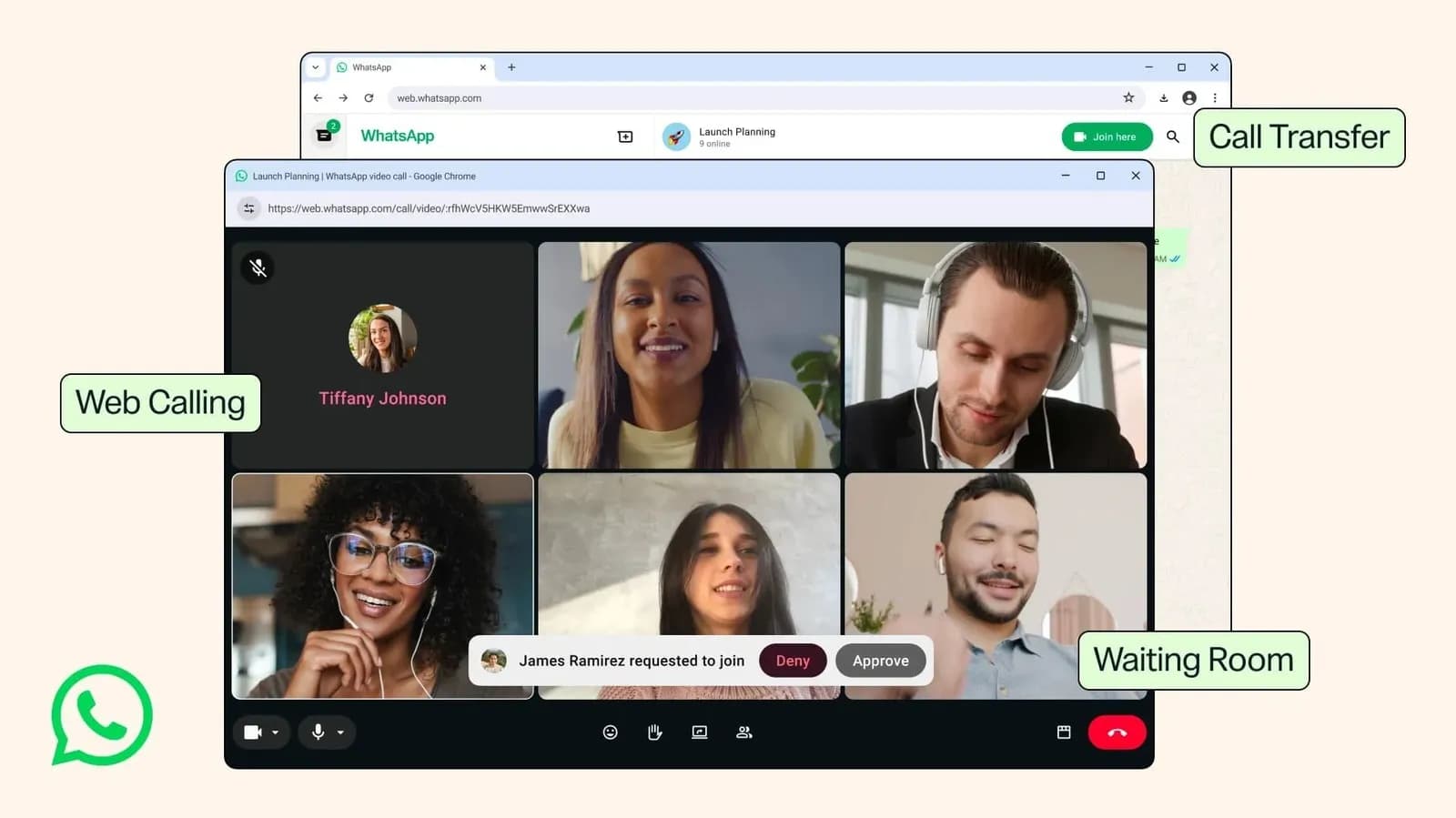
For years, users relying on browser-based messaging faced a frustrating technical compromise: while native mobile and desktop applications offered full feature parity, web clients were frequently relegated to second-class status. WhatsApp has taken a significant step toward closing this functional divide by rolling out native end-to-end encrypted voice and video calling directly within WhatsApp Web. This deployment represents a major engineering milestone, bringing high-stakes cryptographic protection into the standard browser sandbox.
By extending real-time audio and video communications to web browsers while preserving its flagship end-to-end encryption (E2EE) guarantees, Meta is addressing longstanding workflow friction for millions of professionals and casual users alike. The move eliminates the mandatory transition to desktop binaries or mobile screens when placing a call, offering a seamless, cross-platform communication environment accessible from virtually any modern operating system.
The Evolution of WhatsApp’s Multi-Device Architecture
To fully appreciate the technical significance of browser-based encrypted calling, one must examine how WhatsApp Web originally functioned. When the web companion was first launched, it operated purely as an offset mirror of the smartphone app. The primary device handled all cryptographic operations, network routing, and message processing, while the browser client rendered an interface via an active WebSocket connection. If the phone lost power or disconnected from the network, the web session instantly became unusable.
The shift began when Meta re-architected WhatsApp’s core network stack to support true multi-device independence. This overhaul allowed companion clients—including desktop apps and web browsers—to maintain independent identity keys and establish direct, encrypted communication sessions with Meta's relay servers without routing traffic through a primary handset. However, while text messaging, media sharing, and document transfers adapted smoothly to this decoupled framework, real-time media streams presented a far greater technical challenge.
Audio and video sessions demand low latency, dynamic bandwidth adaptation, and strict frame-level cryptographic overhead. Delivering these capabilities through native applications for Windows and macOS was an achievable milestone due to direct access to system-level hardware acceleration and network stacks. Bringing those same real-time security primitives to an unprivileged browser tab, however, required solving complex performance, web compatibility, and security constraints.
Bridging the Feature Divide in the Web Browser
With this feature expansion, users accessing WhatsApp through Google Chrome, Mozilla Firefox, Microsoft Edge, or Apple Safari can initiate and receive end-to-end encrypted audio and video calls directly from their browser windows. The interface integrates seamlessly into existing chat threads, introducing standard voice and video call controls alongside status indicators confirming that the media pipeline is fully encrypted.
This development is particularly consequential for users operating on environments where installing native applications is restricted or impossible. Operating systems such as ChromeOS, Linux distributions, and managed enterprise workstations often lack official native WhatsApp desktop builds. Previously, users on these platforms were forced to rely on unofficial wrapper tools or switch to mobile devices whenever a call came through. Bringing encrypted voice and video calls directly into the standard web browser establishes true platform parity across diverse desktop environments.
Furthermore, the update simplifies user workflows by reducing context switching. Professionals who manage client communication alongside web-based productivity suites can now answer calls within the same browser session where they manage email, documents, and task boards, streaming the interaction directly through their workstation’s peripheral setup without hardware bridging.
Under the Hood: End-to-End Encryption in a Web Environment
Implementing end-to-end encryption for real-time video and audio streams within a web client involves sophisticated orchestration of web standards and cryptographic primitives. At its core, WhatsApp’s encryption framework relies on an adaptation of the Signal Protocol, which uses ephemeral key exchanges to establish forward secrecy and breakability resistance for every session.
In a standard web messaging environment, text messages are encrypted using symmetric keys derived from initial asymmetric handshakes. For real-time media streams, however, WhatsApp leverages WebRTC (Web Real-Time Communication) integrated with frame-level encryption layers. WebRTC provides the underlying peer-to-peer connection framework, network address translation (NAT) traversal protocols via STUN/TURN servers, and media codec management.
To guarantee end-to-end security, media frames must be encrypted on the sender's device before leaving the browser context and decrypted only after reaching the destination client. Web browsers achieve this through APIs such as WebRTC Encrypted Media Transform (Insertable Streams). This capability allows JavaScript applications—working in tandem with WebAssembly (Wasm) modules—to manipulate raw media frames in secure Web Workers prior to transmission, ensuring that intermediate servers managed by Meta handle only unreadable, encrypted packet payloads.
Security Considerations in the Web Sandbox
While native applications run inside dedicated process spaces managed by the desktop operating system, web applications execute inside the browser's sandbox. This distinction introduces unique threat vectors and implementation challenges that security engineers must carefully navigate when deploying high-assurance cryptographic tools on the web.
One of the primary security vectors for web-based cryptography is the code delivery model. Unlike compiled native software binaries, which undergo code signing and static verification prior to installation, web applications fetch executable JavaScript dynamically on every page load or session initialization. If a malicious actor or malicious browser extension tampers with the web assets, the cryptographic integrity of the application could theoretically be compromised without the user's knowledge.
To mitigate these risks, modern secure web applications rely on strict Content Security Policies (CSP), Subresource Integrity (SRI) checks, and domain isolation techniques. Meta has invested heavily in client-side integrity measures, including code-verification extensions and automated resource monitoring, to verify that the scripts running inside the user's browser context match the authentic, audited source code. For end users, these underlying safeguards ensure that encrypted web calls maintain a trust profile comparable to their desktop counterparts.
Strategic Implications for the Real-Time Communication Market
WhatsApp’s decision to bring encrypted calls to the web directly impacts the broader landscape of real-time communication tools. For years, the enterprise and consumer communications markets have been split between dedicated collaboration suites like Zoom, Google Meet, and Microsoft Teams, and instant messaging networks like WhatsApp, Signal, and Telegram.
By removing the requirement for dedicated app installations to conduct secure calls, WhatsApp poses a stronger alternative to web-first communication platforms. Small businesses, freelancers, and global teams that already use WhatsApp for asynchronous text messaging can now consolidate their real-time voice and video calls within the exact same ecosystem, lowering operating friction and software overhead.
This move also puts competitive pressure on alternative secure messaging services. While competitors have offered robust desktop applications, seamless, secure web-based calling across all major desktop browsers remains a difficult technical standard to execute at scale. WhatsApp’s infrastructure scale allows it to absorb the bandwidth and relay costs associated with routing encrypted WebRTC calls across global networks, setting a high benchmark for rivals.
Developer Lessons and Technical Takeaways
For software engineers, web developers, and system architects, the arrival of encrypted voice and video calls on WhatsApp Web offers several valuable lessons in modern web application engineering:
- WebAssembly as a Cryptographic Enabler: Heavy cryptographic routines and media transformations that were once considered too computationally intensive for JavaScript can now execute efficiently at near-native speeds using compiled WebAssembly modules.
- WebRTC Maturity: The reliance on standardized WebRTC APIs demonstrates how mature browser-native communication primitives have become, enabling enterprise-grade real-time media pipelines without custom plugins.
- Decoupled Architecture Design: Moving from a central host-dependency model to independent, multi-device key management proves the longevity of modular cryptographic protocols when expanding to web clients.
- Browser Performance Optimization: Leveraging Web Workers to handle frame encryption off the main thread prevents user interface lag, proving that high-security tasks do not have to degrade web client responsiveness.
The Road Ahead for Secure Web Services
The launch of end-to-end encrypted audio and video calling on WhatsApp Web signals a broader shift in web software development: the browser is no longer a restricted, lightweight alternative to native applications. With modern web standards, hardware-accelerated processing, and advanced security frameworks, complex client-side applications can execute sensitive real-time workloads directly within a standard browser tab.
As Meta continues to refine its cross-platform architecture, developers and users alike can expect further convergence between native and web communication environments. For now, the rollout of encrypted web calling provides immediate utility, delivering high-assurance privacy, platform independence, and frictionless communication to millions of desktop users worldwide.
Source: engadget.com