
The Rhetorical Shift: Analyzing the Political Discourse Surrounding Executive Authority

The Evolution of Political Narrative
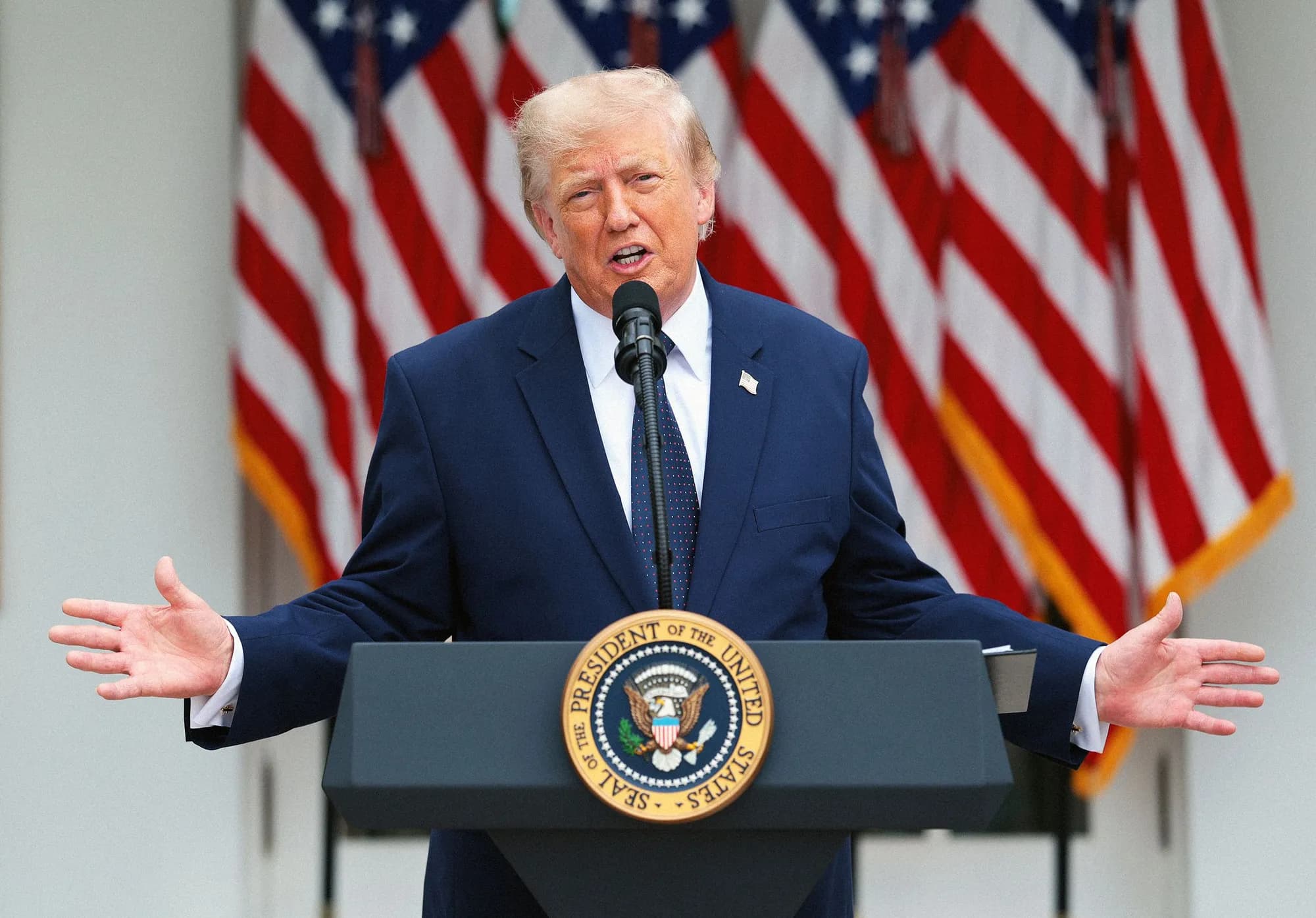
In recent weeks, the discourse surrounding former President Donald Trump’s public addresses has taken a sharp turn, moving from standard campaign rhetoric into the realm of constitutional speculation. Supporters and critics alike are parsing his words for signals regarding how he might wield executive authority if returned to office. This focus has centered specifically on the Insurrection Act, a piece of 19th-century legislation that grants the president broad powers to deploy the military domestically under specific, extreme circumstances.
For those who have long maintained that the 2020 election results were illegitimate, these speeches are being interpreted not as political posturing, but as a roadmap for a radical restructuring of federal power. This interpretation has gained significant traction within specific online echo chambers, where the belief that the current political system is irredeemably broken has become a foundational tenet. The resulting narrative suggests that the executive branch is preparing to bypass traditional checks and balances to restore what these groups view as the 'true' order of the country.
Understanding the Insurrection Act
To understand why this specific piece of legislation has become a focal point, one must look at the history of the Insurrection Act of 1807. Originally designed to allow the president to suppress rebellions or enforce federal law when local authorities are unable or unwilling to do so, the law is intentionally broad. It provides the executive with significant discretion, as the threshold for what constitutes an 'insurrection' or 'obstruction of the laws' is largely left to the president's own judgment.
While the act has been invoked historically to enforce civil rights and maintain order during periods of intense domestic unrest, its application has always been a subject of intense debate. Legal scholars have long argued that the lack of clear, objective criteria for its use makes it a potential tool for executive overreach. In the current climate, this ambiguity is being weaponized by those who wish to see the military utilized as a primary instrument of domestic policy enforcement, effectively blurring the lines between military and civilian governance.
The Intersection of Misinformation and Policy
The current fervor surrounding these speeches cannot be separated from the broader ecosystem of election denialism that has persisted since 2020. By framing the previous election as a 'stolen' event, proponents of this theory have created a psychological framework where extraordinary measures are not just justified, but necessary. This creates a feedback loop: the more the rhetoric emphasizes the need for a 'correction,' the more the audience looks for signs of that correction in every public statement.
From a communications perspective, this is a masterclass in audience segmentation. By using coded language and references to constitutional 'restoration,' political figures can signal their intentions to a specific base without explicitly stating a policy platform. This allows for plausible deniability while simultaneously energizing a segment of the population that feels alienated from the traditional democratic process. The result is a highly polarized environment where the interpretation of a speech is entirely dependent on the listener's pre-existing belief system.
Implications for Institutional Stability
The normalization of discussions regarding the use of the military for domestic political objectives poses a significant risk to institutional stability. When a large portion of the electorate begins to view the military as a partisan tool rather than a neutral defender of the constitution, the fundamental trust required for a functioning democracy begins to erode. This is not merely a political disagreement; it is a challenge to the norms that have governed the transfer of power and the limits of presidential authority for over two centuries.
Furthermore, the reliance on such extreme measures suggests a growing impatience with the slow, deliberative nature of legislative and judicial processes. If the executive branch is perceived as having the power to unilaterally resolve deep-seated political grievances through force, the incentive to participate in traditional political discourse diminishes. This shift threatens to move the country away from a system of consensus-building and toward one defined by the assertion of raw executive power.
The Role of Digital Platforms in Amplifying Rhetoric
The rapid spread of these theories is facilitated by the architecture of modern digital platforms, which prioritize engagement over accuracy. Algorithms designed to keep users on a site often promote content that confirms existing biases, effectively insulating individuals from counter-arguments or factual corrections. In this environment, speculation about the Insurrection Act can move from the fringes to the mainstream in a matter of days, gaining a veneer of legitimacy through sheer repetition.
For those monitoring the health of the information ecosystem, this presents a daunting challenge. Traditional fact-checking is often ineffective against narratives that are rooted in identity and belief rather than verifiable data. When a community is convinced that they are witnessing the 'truth' behind a veil of mainstream media deception, any attempt to provide context is dismissed as part of the conspiracy itself. This creates a closed loop that is incredibly difficult to penetrate, leaving the public discourse vulnerable to radicalization.
Looking Toward the Future
As we look toward the next election cycle, the rhetoric surrounding the use of executive power will likely continue to intensify. It is incumbent upon both the public and political observers to distinguish between campaign hyperbole and genuine threats to the constitutional order. While the Insurrection Act remains a legitimate, if controversial, tool of the executive branch, its potential misuse is a matter of serious public concern that requires rigorous oversight and clear, transparent debate.
Ultimately, the health of a democracy depends on the public's ability to engage with reality, even when that reality is uncomfortable. If the discourse continues to be dominated by the promise of shortcuts and the allure of authoritarian solutions, the foundational principles of the republic will remain at risk. The challenge for the coming years will be to restore a shared understanding of the limits of power and the importance of the institutions that protect them from abuse.
Closing Takeaway
The debate over the Insurrection Act is a symptom of a deeper crisis of confidence in democratic institutions. Whether these speeches represent a genuine intent to reshape governance or are merely a strategic play for voter loyalty, the conversation itself reveals a dangerous shift toward the acceptance of executive force as a primary political instrument.
Source: wired.com