
Starship Takes Big Leap Forward: SpaceX's 13th Flight Test Integrates Next-Gen Starlink Satellites

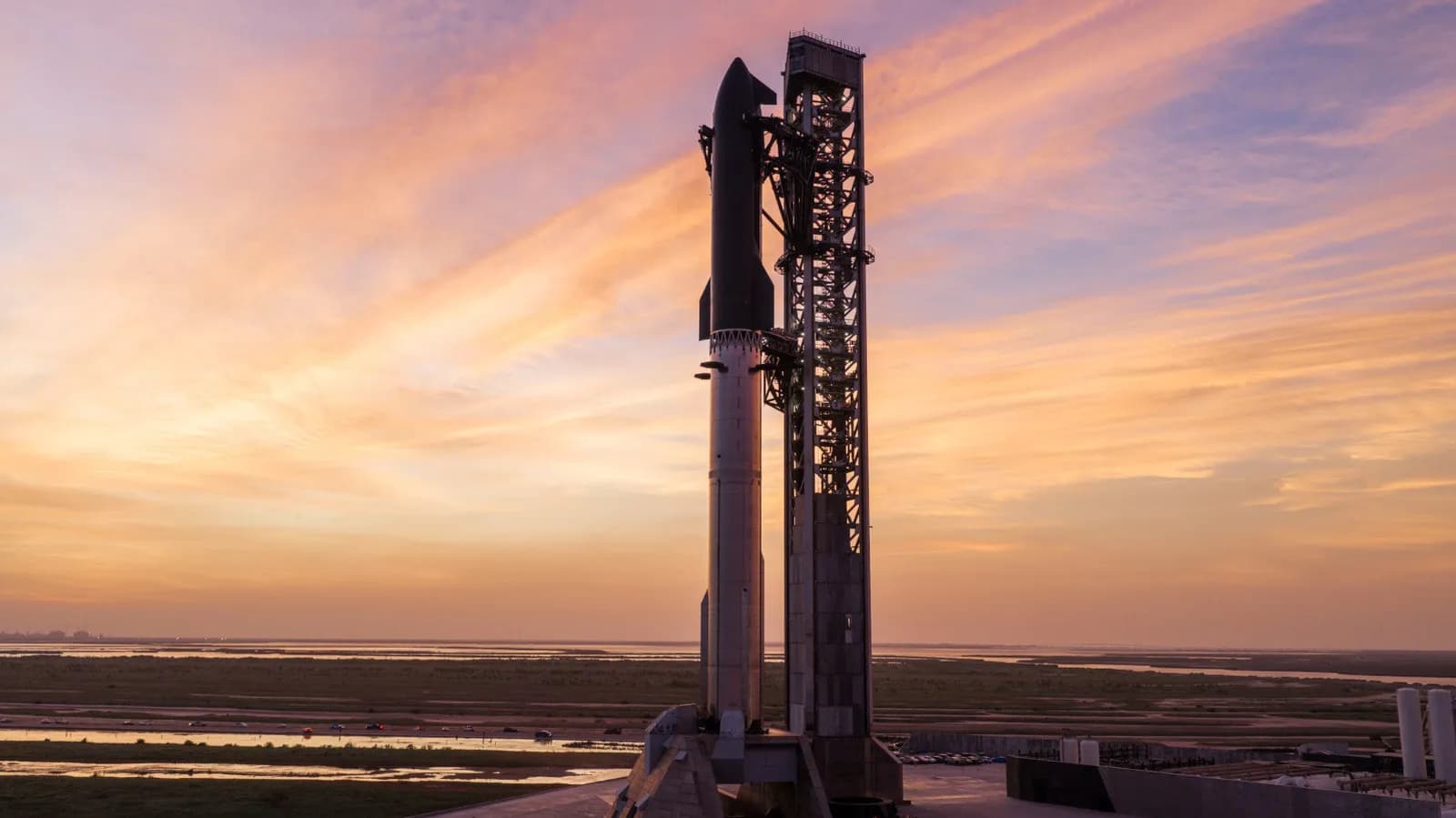
SpaceX has reached a major milestone in its ongoing development of the world's most powerful rocket system. The company's 13th Starship test flight lifted off with a payload of 20 next-generation V3 Starlink satellites on board. This mission represents a decisive transition for the Starship program, shifting focus from early prototype atmospheric testing and basic orbital maneuvers toward true operational capability and heavy-payload transport.
For years, observers watched Starship evolve through fiery atmospheric hops, rapid iterative destruction, and crucial recovery attempts. Now, integrating functional commercial hardware directly into the vehicle's massive payload bay proves that SpaceX is moving rapidly toward commercializing the platform. The mission provides vital real-world operational data while accelerating the rollout of next-generation global internet infrastructure.
From Prototypes to Payloads: The Evolution of Starship Testing
The journey to this 13th test flight reflects SpaceX's philosophy of rapid prototyping and aggressive flight testing. Earlier missions were designed primarily to prove structural integrity, engine performance during atmospheric ascent, thermal protection shield survival during re-entry, and precise landing control. Each iterative flight provided high-density telemetric data that reshaped heat shield tiles, flap mechanics, and Raptor engine thrust vector control systems.
Transitioning from bare-bones test hulls to carrying 20 fully functional V3 Starlink satellites indicates high confidence in Starship's primary stage integration and internal payload deployment systems. Rather than launching ballast or empty space, SpaceX is leveraging its own testing cadence to bootstrap its broadband constellation, compressing product development cycles in a way no traditional aerospace contractor can match.
Inside the Mission: Deploying Next-Generation Satellites
The headline feature of this 13th launch is its cargo: 20 next-generation V3 Starlink satellites. These satellites represent a major leap forward in hardware capabilities compared to their predecessors. The V3 units are larger, heavier, and significantly more capable, featuring higher-bandwidth phased array antennas, enhanced optical inter-satellite laser links, and direct-to-cell communication infrastructure.
Because of their increased size and weight, V3 satellites cannot be deployed efficiently using SpaceX’s workhorse rocket, the Falcon 9, in large quantities. Starship’s immense inner volume and unprecedented payload capacity were specifically designed to accommodate these larger satellite footprints. Testing the payload dispersal mechanism under real orbital conditions is a critical hurdle that this flight directly addresses.
Why Starship is Essential for the Future of Starlink
The business model of Starlink depends heavily on launch capacity and cost-per-kilogram to low Earth orbit. While Falcon 9 has achieved an unprecedented flight cadence, its payload fairing size and mass limits impose a strict ceiling on how many next-gen satellites can reach space in a single launch. To build out a dense, high-throughput global constellation capable of serving millions of active users and enterprise customers, SpaceX requires a dramatically larger transport vehicle.
Starship provides the scale necessary to deploy entire clusters of heavy satellites in a single mission. By drastically lowering launch costs per payload unit through full and rapid reusability, Starship enables SpaceX to continually upgrade its constellation with state-of-the-art orbital hardware. Successful deployments on test flights like this 13th launch demonstrate how tightly integrated SpaceX’s launch services and satellite communication divisions truly are.
Engineering Challenges: Payload Bay Mechanisms and Orbital Dynamics
Deploying satellites from Starship presents novel engineering challenges distinct from traditional fairing separation mechanisms. Instead of splitting open a clamshell fairing that falls back into the atmosphere or ocean, Starship uses a dedicated payload door mechanism often referred to as a payload dispenser or door slot mechanism. Safely ejecting 20 heavy V3 satellites sequentially through a specialized bay door without causing structural collision or attitude drift requires exact control systems.
Furthermore, managing liquid oxygen and methane propellant boil-off during orbital maneuvers, controlling thermal dynamics while the payload bay is opened, and executing precise deploy timing demand highly accurate software logic. Engineers are closely monitoring how the satellite release affects Starship’s center of mass, flight stabilization, and subsequent re-entry trajectories, yielding invaluable data for future fully operational missions.
The Developer and Tech Industry Perspective: Global Connectivity Impacts
From an engineering and software architecture perspective, the rapid deployment of next-generation orbital networks changes the landscape for global infrastructure. Low Earth Orbit (LEO) satellite constellations offering low latency and high bandwidth alter how cloud services, edge computing, and Internet of Things (IoT) platforms are deployed globally. For developers working on distributed applications, remote telemetry, maritime tracking, or aviation software, expanded Starlink capacity reduces reliance on spotty terrestrial networks.
Moreover, the integration of direct-to-cell capabilities in newer Starlink hardware paves the way for ubiquitous mobile connectivity. As satellite density increases via heavy-lift vehicles like Starship, mobile developers can build applications with the baseline assumption that cellular connectivity dead zones will eventually become obsolete. This capability enables new paradigms for emergency response software, field asset management, and global logistics tracing.
Regulatory Horizons and Space Environmental Management
As launch frequency ramps up and Starship moves into operational payload delivery, regulatory and environmental considerations remain at the forefront. The Federal Aviation Administration (FAA) and international aerospace bodies scrutinize every flight test for atmospheric safety, debris mitigation, and environmental impact around launch sites. Demonstrating safe, controlled re-entry and precise payload placement is critical for maintaining regulatory clearance for frequent flight cadence.
Additionally, orbital debris management is a key technical metric. The deployment of 20 V3 satellites must adhere to strict end-of-life deorbit protocols and active collision avoidance standards. SpaceX continues to equip its satellites with automated maneuvering logic driven by real-time orbital tracking data to ensure the long-term sustainability of low Earth orbit operations.
A Defining Moment for Commercial Launch Infrastructure
SpaceX's 13th Starship test flight carrying 20 V3 Starlink satellites represents much more than a routine flight test; it signals the start of heavy payload deployment capabilities for deep-space and orbital infrastructure. By turning test flights into productive payload deployments, SpaceX accelerates its technical timeline while proving out the economic viability of its super-heavy platform.
As Starship continues to refine its launch, deployment, and recovery procedures, the commercial space market draws closer to an era of routine, low-cost transport to low Earth orbit. For the technology ecosystem at large, this progress guarantees that global connectivity networks will expand at a rapid pace, unlocking new possibilities for software engineers, cloud architects, and enterprise networks worldwide.
Source: engadget.com