
Redefining the Wrist: What the CMF by Nothing Watch 3 Pro Tells Us About the Future of Budget Wearables

The Rise of CMF and the Budget Wearable Dilemma
For years, the consumer electronics market has been sharply divided when it comes to wrist-worn technology. On one end of the spectrum sit premium smartwatches like the Apple Watch and Samsung Galaxy Watch series, which offer robust app ecosystems, cellular connectivity, and advanced health tracking at premium price points. On the other end are budget-friendly fitness trackers, which have increasingly stripped away their screens or shrunk their displays to keep manufacturing costs low. This has left consumers with a difficult choice: pay a premium for a fully realized smartwatch, or settle for a utilitarian, screen-compromised fitness band.
Enter CMF by Nothing, a sub-brand launched with the explicit goal of democratizing great design and functional technology. By focusing on essential features and striking aesthetics, CMF has carved out a unique niche in the crowded hardware landscape. The brand's philosophy challenges the notion that affordable devices must look cheap or compromise on the visual experience. This strategy is exemplified by their latest pricing moves, which bring highly capable hardware down to a price point previously reserved for basic, screenless fitness trackers.
Analyzing the CMF Watch 3 Pro Proposition
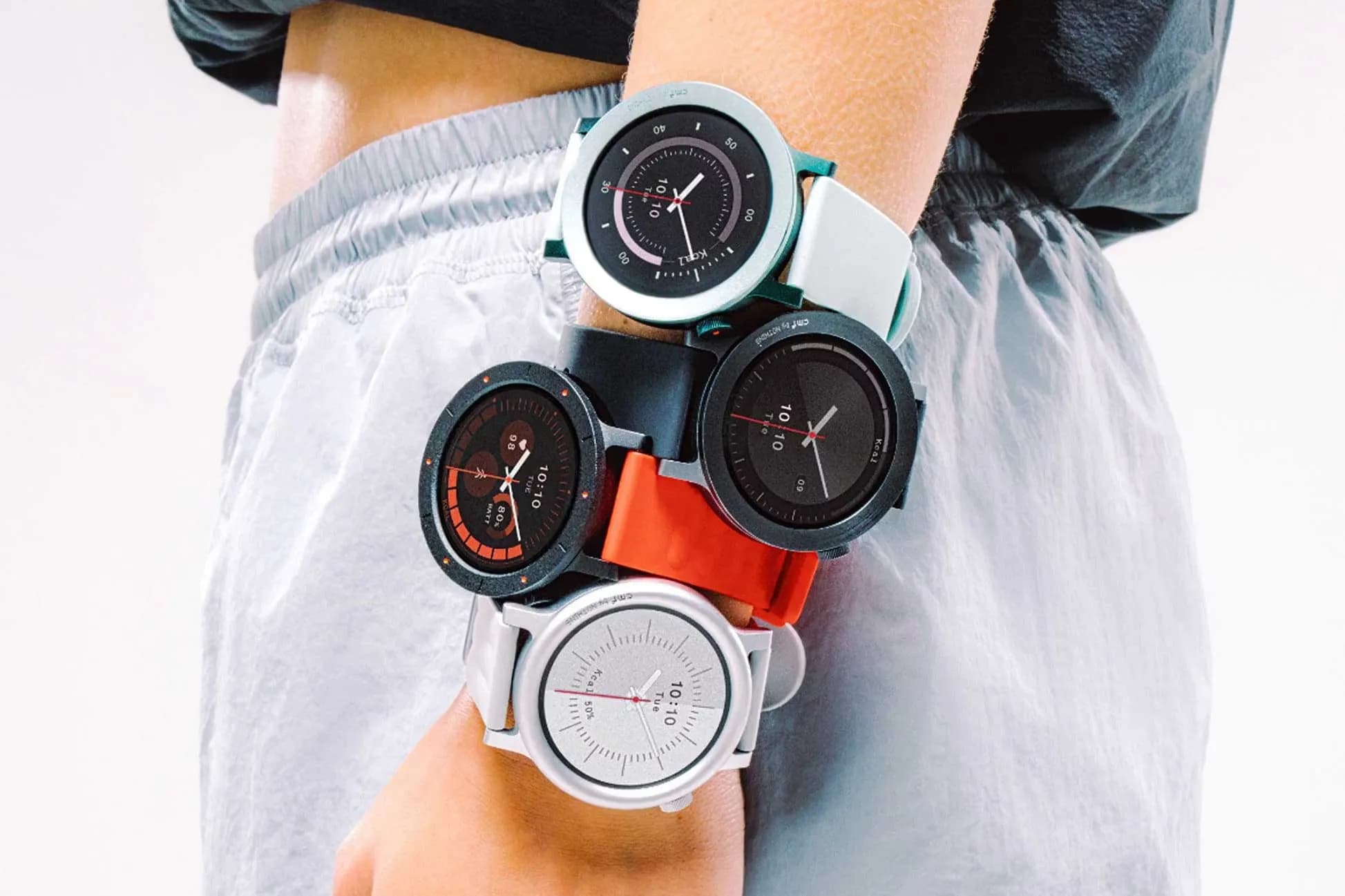
The CMF by Nothing Watch 3 Pro represents a significant disruption in the budget wearable space, particularly with its recent pricing drop to just $69 on Amazon, down from its typical retail range of $79 to $99. At this price point, the device offers a massive 1.43-inch OLED display, a hardware feature that is almost unheard of in the sub-$70 category. Traditionally, devices in this price bracket rely on low-resolution LCD panels with thick bezels and poor outdoor visibility. By shipping a vibrant, high-contrast OLED screen, CMF is raising the baseline expectation for what a budget smartwatch should look like.
But the disruption goes beyond the display panel itself. The Watch 3 Pro leverages Nothing’s signature industrial design language, featuring clean lines, minimalist typography, and a distinct visual identity that stands out from the sea of generic Apple Watch clones. By offering this level of design sophistication at a double-digit price tag, the device forces competitors to rethink their product roadmaps. It proves that budget hardware does not have to look like an afterthought, and that aesthetic appeal can be a primary selling point even at the entry level.
The Developer's Angle: RTOS vs. Full Smartwatch OS
From a software engineering and developer perspective, the CMF Watch 3 Pro highlights an ongoing architectural divide in the wearable industry. To achieve its low price point and impressive battery life, the watch does not run a resource-heavy operating system like Google's WearOS. Instead, it utilizes a lightweight Real-Time Operating System (RTOS). For developers, this choice represents a classic trade-off between system capability and resource efficiency.
Building for an RTOS means that the device cannot support a traditional third-party app store. Instead, all applications, watch faces, and widgets must be pre-compiled and optimized to run on highly constrained hardware. While this limits the extensibility of the watch, it allows the system to run incredibly smoothly on low-cost microcontrollers. Developers working within these constraints must focus heavily on memory management, asset compression, and UI optimization. The challenge is to deliver a smooth, 60Hz-like visual experience on a screen as large as 1.43 inches without draining the battery in a single day—a feat that requires deep integration between the custom software and the display driver.
Democratizing Health and Fitness Tracking
The aggressive pricing of the Watch 3 Pro also has major implications for the democratization of personal health monitoring. Historically, advanced health sensors and large, easy-to-read data displays were locked behind a high paywall. By offering a spacious OLED screen at $69, CMF makes health metrics more accessible to a broader demographic, including younger users, budget-conscious consumers, and those in emerging markets.
A larger screen allows for richer data visualization directly on the wrist, reducing the user's dependency on a companion smartphone app to interpret their daily activity. Whether it is displaying real-time heart rate graphs during a workout or presenting detailed sleep stage breakdowns, the visual real estate of a 1.43-inch display changes how users interact with their biometric data. For the industry, this pressure will likely force legacy fitness brand manufacturers to upgrade their entry-level displays or risk losing market share to design-forward, budget-friendly competitors.
The Hidden Trade-offs of Ultra-Affordable Hardware
While a $69 smartwatch with an OLED screen sounds like an uncompromised victory for consumers, it is important to analyze the trade-offs inherent in ultra-affordable hardware. Manufacturing a device at this price point requires strict cost-control measures. These compromises typically manifest in areas that are not immediately visible on a spec sheet, such as sensor accuracy, long-term software support, and ecosystem integration.
For instance, budget smartwatches often use less sophisticated sensor arrays and algorithms compared to their premium counterparts, which can lead to greater variance in step counting, heart rate monitoring, and GPS tracking. Furthermore, the long-term software support lifecycle for budget devices is often much shorter. While an Apple Watch might receive software updates for five years, budget RTOS devices rarely receive major feature updates beyond their first year on the market. Consumers must weigh these limitations against the upfront cost savings when deciding if a budget device fits their lifestyle.
What This Means for the Future of Wearables
The success of the CMF Watch 3 Pro suggests that the wearable market is maturing in a way that mirrors the smartphone market. We are entering an era where "good enough" hardware is becoming incredibly cheap, and design is becoming the primary differentiator. As component costs for OLED displays and low-power processors continue to fall, we can expect to see an influx of highly stylish, ultra-affordable wearables that challenge the dominance of established tech giants.
For the broader IoT and smart home ecosystem, cheap but highly visual wearables open up new possibilities for ambient computing. A $69 device with a large screen can act as a highly accessible controller for smart home devices, a digital key, or a dedicated notification hub. As these devices become more ubiquitous, the demand for cross-platform compatibility and open APIs will likely grow, pushing manufacturers to build more open ecosystems that allow budget wearables to communicate seamlessly with a wide variety of smart devices.
Closing Takeaway
The CMF by Nothing Watch 3 Pro proves that the barrier to entry for stylish, functional wearable technology has never been lower. By delivering a premium 1.43-inch OLED display and a distinct design aesthetic for just $69, Nothing is challenging the industry to do more with less. While it may lack the deep app ecosystem of premium smartwatches, its aggressive pricing and thoughtful design make it a compelling option that will undoubtedly shape consumer expectations and competitor strategies for years to come.
Source: theverge.com