
From Viral Concept to Physical Reality: How the Nopia Synthesizer is Redefining Music Hardware Design

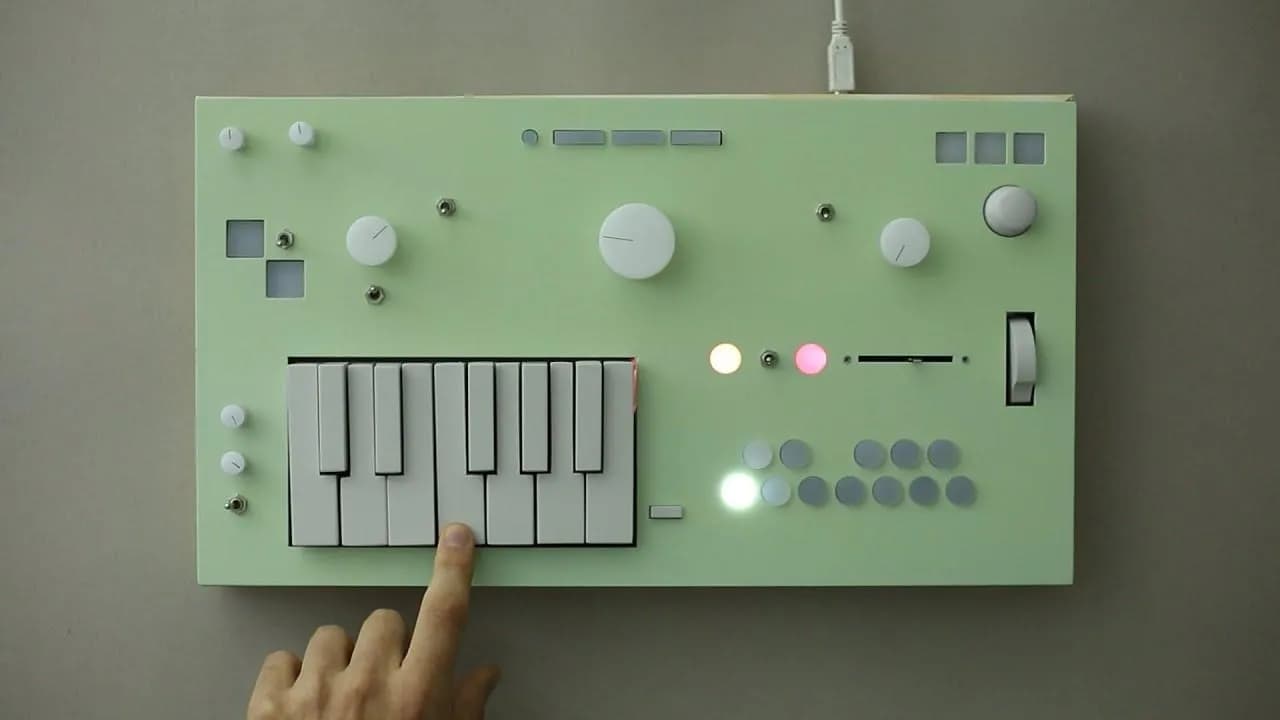
The Spark of a Viral Instrument
In the modern landscape of music technology, it is rare for a completely new instrument concept to capture the collective imagination of the internet overnight. Yet, that is precisely what happened in 2023 when creators Martin Grieco and Rocío Gal shared the first glimpses of the Nopia. With its striking aesthetic, unconventional interface, and promise of simplifying complex musical relationships, the prototype quickly went viral across social media platforms, leaving synthesist communities and electronic musicians eager for more information.
For many indie hardware projects, viral fame is a double-edged sword. It generates immense initial hype but also puts intense pressure on small development teams to deliver a physical product that lives up to polished video demonstrations. After a period of relatively quiet, focused development, the creators recently emerged to showcase the Nopia in its near-final state. The instrument is no longer just a conceptual prototype; it is a fully realized, functional device that is preparing to make its official entry into the commercial market.
Deconstructing the Nopia: Form, Function, and Philosophy
At its core, the Nopia is designed to challenge the traditional paradigms of keyboard instruments and MIDI controllers. Standard keyboards require years of muscle memory and theoretical study to master chord progressions and harmonic structures. The Nopia approaches this challenge from a different angle, utilizing a unique physical layout and visual feedback system that guides the player through chord construction and key relationships intuitively. It bridges the gap between a traditional synthesizer and an interactive educational tool.
By restructuring how notes and chords are arranged physically, the Nopia allows users to explore complex harmonic spaces without getting bogged down by the mechanics of traditional fingerings. This design philosophy prioritizes creativity and flow state over rigid technical execution. The physical interface itself is a testament to modern industrial design, combining tactile controls with a clean, minimalist aesthetic that feels both futuristic and approachable to musicians of all skill levels.
The Long Road from Prototype to Production
Transitioning a hardware project from a beloved internet prototype to a mass-manufacturable consumer product is one of the most difficult challenges in the tech world. The journey is often referred to by hardware developers as the "valley of death." It requires moving beyond hand-soldered breadboards and 3D-printed enclosures to establish relationships with manufacturers, design custom printed circuit boards (PCBs), and source reliable components at scale.
For Grieco and Gal, the process of finalizing the Nopia involved refining every aspect of the device's build quality and internal architecture. Ensuring that the keys feel responsive, the knobs have the right amount of resistance, and the chassis can withstand the rigors of live performance are all critical steps that cannot be rushed. By taking the time to ensure the device is "basically finished" before launching, the creators are aiming to avoid the common pitfalls of premature hardware releases, such as shipping buggy firmware or fragile physical units.
Why It Matters: Democratizing Music Theory Through UX
From a developer and user experience (UX) perspective, the Nopia represents a broader trend in creative technology: the democratization of complex domains. Just as low-code and no-code platforms have made software development accessible to non-programmers, innovative hardware interfaces are making music theory accessible to non-traditional musicians. The Nopia translates abstract mathematical relationships of sound into a physical, visual language that the human brain can process instantly.
This shift in UX design is incredibly powerful for modern producers who may rely heavily on software grids and piano rolls to write music. By providing a tactile, hardware-based alternative that inherently understands harmony, the Nopia allows creators to break away from the computer screen. It encourages accidental discoveries and happy accidents, which are often the foundation of great art, while still maintaining a structured framework that prevents dissonant mistakes.
The Intersection of Embedded Systems and Creative Tech
Under the hood, a device like the Nopia relies on a sophisticated marriage of embedded systems programming and real-time digital signal processing. To make an instrument feel truly expressive, latency must be virtually non-existent. When a player presses a key or turns a dial, the system must register the input, calculate the corresponding MIDI data or internal synth engine parameters, and generate the sound or visual feedback in a matter of milliseconds.
For developers working in the creative tech space, the Nopia serves as an inspiring case study in resource management and firmware optimization. Managing multiple inputs, driving visual displays or LED matrices, and maintaining a stable MIDI clock require highly efficient code. The success of the Nopia's final hardware will depend heavily on how well its internal software handles these real-time demands, ensuring a seamless, lag-free connection between the player's hands and the resulting audio output.
Market Challenges and the Road Ahead
As the Nopia prepares for its official commercial launch, it enters a highly competitive and crowded music technology market. Established industry giants have long dominated the synthesizer and MIDI controller space, backed by massive distribution networks and manufacturing power. For an independent team, standing out requires not just a unique product, but also a sustainable business model and an active, engaged community.
Pricing will be a crucial factor in the Nopia's market adoption. The creators must balance the high costs of low-volume boutique manufacturing with a price point that remains accessible to bedroom producers and independent artists. However, the viral foundation they built in 2023 gives them a distinct advantage. There is already a passionate, pre-existing audience waiting for the opportunity to purchase the device, which could help fuel a successful crowdfunding campaign or initial direct-to-consumer sales run.
A New Era for Niche Hardware Creators
The story of the Nopia is a testament to the changing dynamics of the hardware industry. Today, a small team of passionate creators can design, prototype, market, and manufacture a highly specialized electronic instrument that captures global attention. With the democratization of design tools, rapid prototyping, and global supply chains, the barrier to entry for hardware innovation has never been lower.
Ultimately, the Nopia is more than just a new synthesizer; it is a symbol of how creative design and thoughtful engineering can breathe new life into centuries-old musical concepts. As Martin Grieco and Rocío Gal prepare to bring their creation to the hands of musicians worldwide, the industry will be watching closely to see how this viral sensation transitions from an online curiosity into a staple of modern music production.
Source: theverge.com