Data, Anomalies, and Astrophysics: Avi Loeb to Lead New Federal UAP Science Advisory Council

The New Frontier of Anomalous Phenomena
For decades, the study of Unidentified Anomalous Phenomena (UAPs)—historically referred to as UFOs—existed on the fringes of respectable scientific discourse. However, a paradigm shift has been quietly unfolding within the highest corridors of power. What was once dismissed as the domain of conspiracy theorists has transformed into a pressing national security and scientific inquiry. In a major step toward formalizing this investigation, the White House, alongside the Pentagon, the Office of the Director of National Intelligence (ODNI), the FBI, and the broader intelligence community, has established the UAP Science Advisory Council.
To lead this ambitious and highly scrutinized initiative, the government has tapped Harvard astrophysicist Dr. Avi Loeb. Known for his unconventional and often controversial willingness to consider extraterrestrial explanations for anomalous cosmic events, Loeb’s appointment signals a deliberate move to inject rigorous academic methodology into a field long dominated by classified intelligence gathering. The council’s primary directive is to provide objective scientific reports and strategic advice to the UAP Governing Board, with the ultimate goal of resolving the true nature of these unexplained aerial encounters.
Who is Avi Loeb?
Dr. Avi Loeb is no stranger to the spotlight, nor is he a stranger to academic skepticism. As the former chair of Harvard University’s astronomy department and the founder of the Galileo Project—a systematic scientific search for evidence of extraterrestrial technological artifacts—Loeb has long advocated for open-minded empirical investigation into space anomalies. He gained widespread public attention with his hypothesis that 'Oumuamua, the first interstellar object detected passing through our solar system in 2017, could potentially be an artificial probe rather than a naturally occurring comet or asteroid.
While his willingness to entertain the extraterrestrial hypothesis has drawn sharp criticism from some of his peers, who accuse him of sensationalism, it also makes him a unique fit for this new federal role. Loeb possesses the rare combination of elite academic credentials and an unabashed willingness to investigate phenomena that other scientists might avoid for fear of reputational damage. By placing him at the helm of the UAP Science Advisory Council, the federal government is signaling that it wants a leader who will not reflexively dismiss anomalous data, but will instead subject it to rigorous, systematic analysis.
The Mandate of the UAP Science Advisory Council
The newly formed council is designed to act as a bridge between the scientific community and the defense establishment. Historically, UAP investigations have been siloed within military and intelligence agencies, where data is heavily classified and analyzed primarily through a threat-assessment lens. The UAP Science Advisory Council aims to change this by introducing a standardized, scientific framework to the evaluation of anomalous events.
The council will analyze data collected from various military and civilian sensors, attempting to categorize and explain phenomena that currently defy easy classification. By providing independent scientific reports to the UAP Governing Board, Loeb and his team will help determine whether specific sightings are the result of advanced foreign adversary technologies, atmospheric anomalies, sensor malfunctions, or something entirely unknown. This structured approach is intended to move the conversation away from anecdotal speculation and toward data-driven conclusions.
The Developer and Data Perspective: A Sensor Fusion Challenge
From a technological and software engineering perspective, resolving the nature of UAPs is fundamentally a massive data integration and sensor fusion problem. The data collected by military personnel and hardware is incredibly diverse, consisting of radar tracks, thermal imaging, high-resolution video, satellite telemetry, and pilot eyewitness accounts. Each of these data streams originates from different proprietary systems, operating at various levels of sensitivity and calibration.
For developers and data scientists, the challenge lies in building robust pipelines capable of ingesting this heterogeneous, noisy data and filtering out known variables. To identify a true anomaly, software must first account for a vast array of mundane explanations, including:
- Weather balloons, commercial drones, and airborne debris.
- Optical illusions caused by camera glare, lens flare, or parallax effects.
- Sensor artifacts, software glitches, and radar clutter.
- Atmospheric phenomena like temperature inversions or plasma discharges.
Only after these variables are systematically ruled out can an event be classified as genuinely anomalous. This requires sophisticated machine learning models trained on vast datasets of known aerial objects, capable of performing real-time anomaly detection across multiple sensor modalities.
The Tension Between Classification and Open Science
One of the most significant hurdles the UAP Science Advisory Council will face is the inherent conflict between the intelligence community's culture of secrecy and the scientific community's reliance on transparency. Science thrives on peer review, open data sharing, and reproducible experiments. In contrast, the military and intelligence agencies that collect UAP data are legally obligated to protect national security secrets, including the precise capabilities and limitations of their advanced sensor systems.
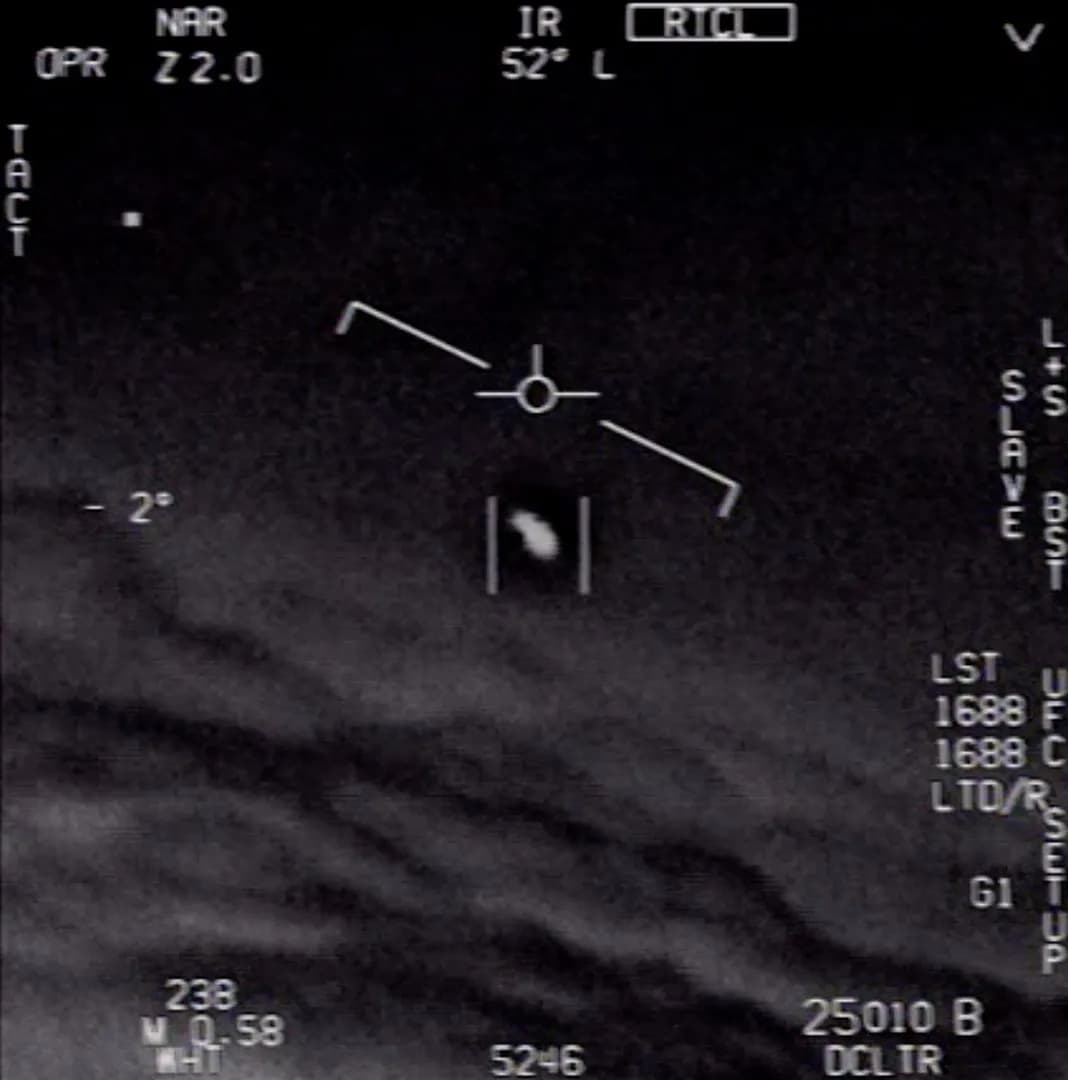
If a highly detailed video of a UAP is captured by a state-of-the-art fighter jet, the raw data may remain classified not because of the object itself, but because publishing the footage would reveal the exact resolution and tracking capabilities of the jet's targeting pod to foreign adversaries. Navigating this tension will be a critical test for Loeb’s leadership. For the council’s findings to gain widespread credibility within the broader scientific community, they must find a way to sanitize and share as much data as possible without compromising national security.
Skepticism, Bias, and the Scientific Method
As the council begins its work, maintaining strict scientific objectivity will be paramount. Critics of Loeb's appointment worry that his public enthusiasm for the extraterrestrial hypothesis could introduce confirmation bias into the council's investigations. In scientific inquiry, the default assumption must always be the null hypothesis—that an unexplained phenomenon has a natural or human-made explanation until proven otherwise.
The scientific method demands that extraordinary claims require extraordinary evidence. The council must guard against the temptation to leap to exotic conclusions when faced with incomplete or low-quality data. In many cases, a lack of sufficient data prevents a definitive explanation, but a case being 'unresolved' is not positive evidence of alien technology. Loeb and his colleagues will need to establish clear, conservative thresholds for what constitutes proof, ensuring that their reports are grounded in verifiable physics and rigorous mathematics.
What Lies Ahead for UAP Research
The establishment of the UAP Science Advisory Council marks a historic moment in the intersection of government, science, and technology. By bringing together the resources of the Pentagon, the FBI, and the intelligence community with the academic rigor of top-tier scientists, the initiative has the potential to finally bring clarity to a subject that has been shrouded in mystery for nearly a century.
Whether the council ultimately attributes these anomalies to advanced foreign surveillance technology, novel atmospheric physics, or something far more paradigm-shifting, the systematic collection and analysis of this data will undoubtedly yield valuable scientific insights. For developers, engineers, and researchers, the methodologies developed to analyze these edge cases could push the boundaries of sensor fusion, computer vision, and anomaly detection technology for years to come.
Source: theverge.com