
Apple Breaks the Form-Factor Mold With the Launch of the Folding iPhone Duo

A Watershed Moment for Mobile Hardware
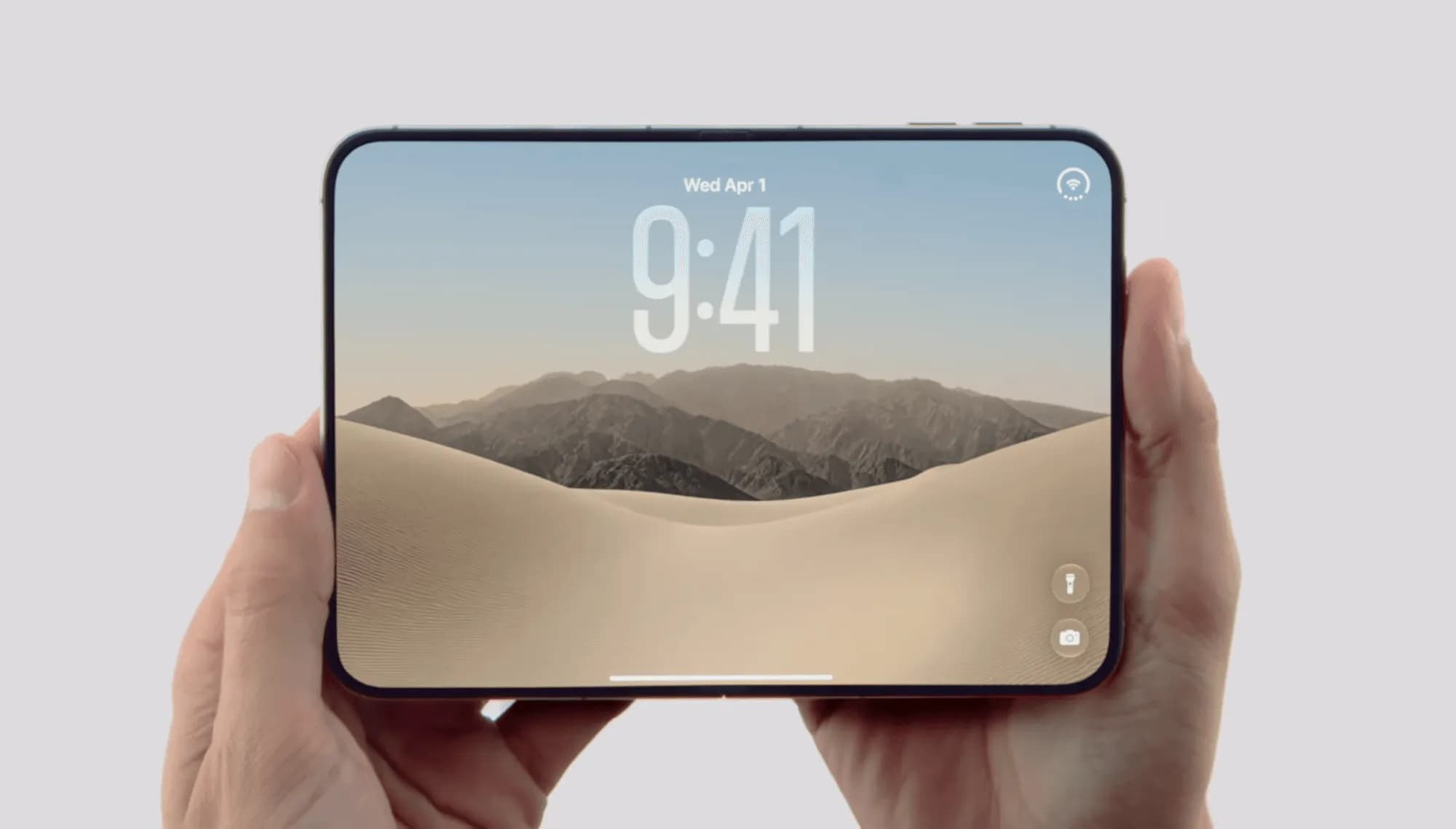
For well over a decade, the core silhouette of the iPhone has remained remarkably consistent. While internal components have grown exponentially faster, camera arrays have expanded, and bezels have steadily shrunk, the foundational glass-sandwich slab has served as Apple's untouchable design dogma. That era has officially closed with the introduction of the iPhone Duo, Apple's long-rumored and heavily anticipated entry into the foldable device category. Representing the most aggressive structural overhaul of its flagship line in recent memory, this launch signals that Cupertino is finally willing to challenge its own orthodoxies in pursuit of fresh consumer demand.
The arrival of a folding iPhone is more than just a new SKU on store shelves; it is a profound philosophical shift for a company historically known for letting nascent tech mature in competitor labs before perfecting it. By stepping into the foldable arena, Apple is validating a form factor that has spent the last several years carving out a passionate, albeit niche, segment of the mobile market. The stakes are extraordinarily high, not only for Apple's bottom line but for the entire trajectory of premium hardware development, setting up a fascinating clash of ecosystems as the device reaches early adopters and industry critics alike.
Tracing the Long Road to the Foldable Form Factor
To understand the magnitude of the iPhone Duo, one must look back at the evolutionary arc of foldable technology over the past half-decade. Early iterations from pioneering Android manufacturers were plagued by mechanical fragility, awkward aspect ratios, prominent crease lines across the display, and prohibitive price points. Consumers and developers viewed these first-generation foldables as fragile proof-of-concept experiments rather than daily-driver replacements. Yet, through successive hardware generations, OEMs steadily refined hinge mechanisms, improved ultra-thin glass durability, and optimized software scaling to make folding screens genuinely viable.
Apple, true to form, observed this incubation period from the sidelines. While competitors iterated through public prototypes, Cupertino's engineering teams reportedly spent years solving the core physics problems of stress distribution, thermal management, and seamless display folding without compromising structural integrity. Rumors surrounding Apple's foldable ambitions have circulated for years, fueled by patent filings detailing novel hinge designs and proprietary screen protection layers. The debut of the iPhone Duo is the culmination of this prolonged research phase, representing Apple's calculated bet that the technology has finally matured enough to meet its exacting standards for user experience and device longevity.
Engineering Marvels and Mechanical Complexity
At the heart of the iPhone Duo narrative is the sheer engineering prowess required to manufacture a reliable folding handset at scale. Building a smartphone that opens and closes thousands of times without degrading the display or developing slack in the hinge requires absolute precision. Apple has reportedly introduced proprietary mechanical architecture designed to distribute mechanical stress evenly across the fold line, minimizing the dreaded screen crease that has long plagued competitors. Furthermore, integrating advanced battery cells, multi-lens camera systems, and thermal dissipation paths into two ultra-thin chassis halves represents a monumental design puzzle.
Beyond the physical hinge, the software-hardware integration defines the user experience. Unfolding the device transitions it from a pocketable smartphone interface into a sprawling canvas akin to a small tablet. This demands dynamic layout adjustments that can scale fluidly without stutter or visual artifacts. Apple's ecosystem strengths—specifically its cohesive silicon strategy and mature developer toolchains—are being put to the ultimate test to ensure that native and third-party applications can adapt instantaneously to these shifting display topologies, maintaining the trademark fluidity users expect from iOS.
The Stakes for Market Dominance and Ecosystem Growth
The launch of the iPhone Duo arrives at a critical juncture for the global smartphone market, which has faced mounting saturation and slowing upgrade cycles in recent years. With traditional slab phones offering diminishing returns on year-over-year innovation, manufacturers have desperately sought a catalyst to reignite consumer enthusiasm. A folding flagship carries immense financial and cultural weight, functioning as both a halo product for tech enthusiasts and a major revenue driver capable of commanding ultra-premium price points.
For Apple, the success of this device could redefine upgrade behavior and cement its dominance in the ultra-luxury tier. If the iPhone Duo resonates broadly, it will compel hesitant consumers to finally retire older slab models, triggering a lucrative hardware refresh cycle. Conversely, any missteps regarding durability, software reliability, or price-to-value ratio could provide an opening for rivals to capture momentum. The entire industry is watching closely to see whether Apple can mainstream a category that has thus far remained a playground for enthusiasts.
Implications for Developers and UI/UX Designers
For software developers and UI/UX designers, the launch of the iPhone Duo introduces a mandatory paradigm shift. Developing for a device that dynamically transforms from a single-handed vertical display into a multi-column tablet workspace requires abandoning rigid layout assumptions. Designers must now craft adaptive user interfaces that gracefully respond to varying aspect ratios, multi-window multitasking states, and hinge-induced screen division zones. Apple's provision of updated layout APIs and simulation tools will be critical in guiding developers through this transition.
This hardware shift also opens exciting creative possibilities for application architecture. Productivity apps can utilize the expanded screen real estate for advanced side-by-side workflows, media applications can leverage folded table-top modes for hands-free viewing, and gaming experiences can incorporate secondary control surfaces. However, ensuring backward compatibility while optimizing for these new spatial capabilities will demand significant engineering bandwidth from development teams striving to keep their software modern and competitive within the Apple ecosystem.
Navigating Market Risks and Open Questions
Despite the immense hype surrounding the iPhone Duo, the device enters the market amid legitimate risks and unresolved questions. Chief among them is consumer skepticism regarding long-term durability. Foldable screens remain inherently more vulnerable to accidental drops, dust ingress, and surface scratches than traditional glass slabs. Apple's choice of materials and warranty offerings will be heavily scrutinized by buyers wary of investing heavily in a first-generation mechanical form factor.
Additionally, the steep price tag associated with advanced folding technology restricts the addressable market, confining early adoption primarily to affluent tech enthusiasts and enterprise power users. Questions also linger regarding battery life optimization, as powering expansive foldable displays without compromising daily stamina is a notorious engineering tightrope walk. How Apple addresses these early friction points will determine whether the Duo establishes a permanent footing or remains a high-end novelty while traditional slabs retain their core market share.
Looking Ahead at the Foldable Future
The debut of the iPhone Duo signals a permanent turning point for mobile technology, cementing foldables as a mainstream luxury tier rather than a passing fad. As Apple commits its engineering and marketing might to this form factor, competitors will be forced to accelerate their own innovation roadmaps to maintain parity. Over the coming years, we can expect rapid iteration on hinge designs, display durability, and software capabilities, ultimately driving these technologies down into more accessible price points.
For developers, designers, and industry observers, this launch initiates an exciting new era of creative experimentation. The constraints that once bound mobile UI design are dissolving, opening the door to spatial, adaptive computing experiences that blur the line between phone and tablet. As the iPhone Duo makes its way into the wild, it lays the groundwork for a hardware landscape where flexibility is no longer the exception, but the expectation.
Source: wired.com